


Browse All Products & Services
Technical Description
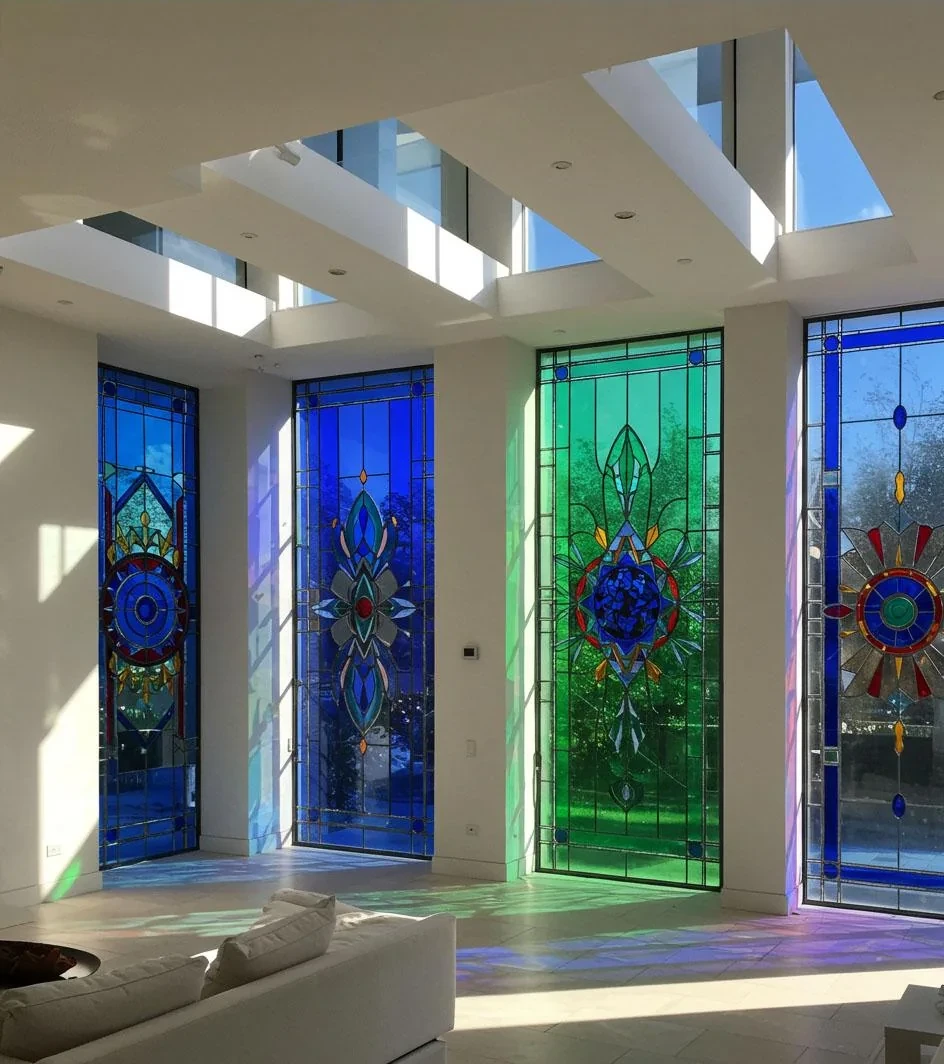
Architectural glass murals combine artwork, branding or cultural graphics with architectural glazing. Images and patterns can be produced using ceramic digital printing, conventional ceramic frit, etching, frosting, laminated interlayers, painting or stained-glass methods. The production method should be selected according to required durability, transparency, colour fidelity, heat treatment and environmental exposure.
System Composition & Configuration
- Processed architectural glass selected for size, safety and support condition.
- Ceramic inks/frit, printed interlayers, films, etching or decorative processes.
- Lamination, heat treatment, backing and lighting components where required.
- Channels, stand-offs, concealed clips, adhesive/mechanical fixing systems and joint details.
Engineering & Performance Considerations
Artwork files require sufficient resolution and correct scale, colour profile and bleed to match the final glass panelisation. For ceramic printing, the printing and heat-treatment sequence should be coordinated with the glass processor. Laminated artwork requires interlayer compatibility and control of bubbles, moisture and edge exposure. Panel joints should respect image continuity while maintaining installation tolerances. Exterior/high-UV applications require inks/interlayers and fixing methods approved for that exposure. Backlighting can change perceived colours and should be reviewed by sample/mock-up where appearance is critical.
Key Design Inputs
- Final artwork resolution, scale, colour profile, panelisation and joint locations.
- Glass type, safety/heat treatment, print/lamination process and exposure/UV requirement.
- Fixing/support, backing, lighting and image-continuity tolerances.
HG Walls Scope / Execution Controls
HG Walls coordinates artwork sizing, panelisation, glass-processing drawings, printing/lamination with approved processors, backing/lighting interfaces, support systems, delivery, installation and alignment. QA includes approved sample, panel numbering, image registration, edge quality, colour consistency and final joint alignment.
QA / Site Acceptance Checks
- Approved colour/sample/mock-up and artwork registration before full production.
- Panel numbering, print/lamination quality, edge processing and colour consistency.
- Installation sequence, joint alignment and final image continuity under intended lighting.
Typical Applications
Lobbies, hotels, offices, temples, cultural spaces, retail, corporate branding and feature walls.
Technical Note
Final configuration and performance criteria are project-specific and subject to approved drawings, calculations, manufacturer documentation and client/consultant approval.
Discuss Your Project With HG Walls
Send the artwork, dimensions, intended exposure and lighting conditions for a project-specific glass-mural review.